Showing posts with label reviews. Show all posts

Monday, 23 November 2015

Where Ecommerce Traffic Will Come From in 2016

1113

The world of eCommerce has evolved dramatically over the last 8 years because of the way small businesses are being able to effectively market to their target audience online in the same way as their big brand competitors have been.
A small business no longer needs to rely on SEO and offline marketing channels to sell their products/services thanks to social media.


As you may know by now, I love sharing reports and this is no different. Yotpo released an eCommerce benchmark report where data was pulled from 65 million orders and 2 billion transactions across 120,000 eCommerce stores.
The data compiled covers everything from traffic quality and quantity, mobile vs. non-mobile traffic, value of customer loyalty and impact of reviews.
Traffic Quality and Quantity
It is no secret that, as I said above, small businesses are taking advantage of social channels however, direct, search and referral traffic still beat social traffic in percentage with 40%, 34% and 10% respectively.


This however does not deny the fact that social traffic is quality traffic. Instagram is the leading traffic source for an average time on site (beating email, direct and referral traffic)


Mobile vs. Non-Mobile
Non-mobile traffic still trumps mobile traffic however, the gap between the two is closing year on year. Mobile accounts for 38% of traffic which is still close to half of non-mobile traffic however, it is still critical for businesses to optimise their website responsively as that 38% of potential sales, may be the make or break of an online business.

How Much is Customer Loyalty Worth?
As we know, customer retention is extremely important as returning customers are more likely to spend with you more than once, because trust has been built. Data shows that customer retention does pay off. Repeating shoppers spent over £250 million during 2014 out of a total £950 million. This accounts for 33% of overall spend from a returning customer.
15% of all customers are repeat shoppers which doesn’t sound like much, but they do account for one-third of the total spend, this study reports. The study also showed that returning customers spend 2.92x more than a one-time buyer.
The Power of Reviews and Ratings
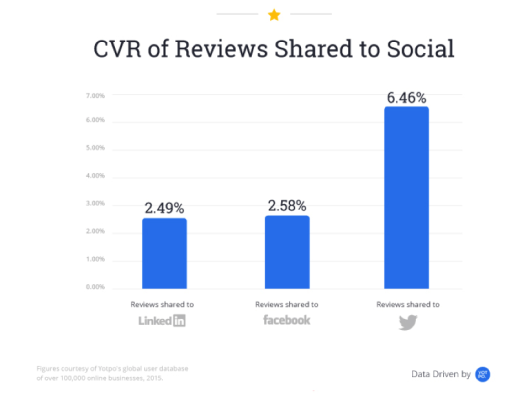
It won’t be surprising to hear that reviews and good ratings help conversion rates. Businesses who use social media to share their communities reviews on their products/services do get a better conversion rate. LinkedIn, Twitter and Facebook conversion rates are much higher than the average industry standard of 2% when reviews are shared. Twitter is the leader at a 6% conversion rate.

From this data it is easy to say that mobile and social media have, and will continue to change eCommerce. Reviews on your products/services are extremely important and do impact a buyer’s purchasing decision.
Whilst this study is based on just 120,000 online businesses, if it’s working for them… It will work for you too.


Sunday, 11 October 2015

The True Value of Social Listening

we-listen-shutterstock-188309225

Can digital marketers collect valuable data by exclusively listening to social chatter? Here's why it's important to accumulate and analyze consumer insights from diverse sources.

Social listening has been the buzzword and Swiss army knife of digital marketing for quite a while now. You want to learn more about your consumers' passions? Use social listening. Trying to identify the latest trend for your category? Figure this out by using social listening. Need to figure out what consumers really care about? Again, the answer can be found via social listening.
That’s all fine and good, but I believe we are dramatically exaggerating the value of social listening when it comes to its role in creating consumer insights. Don’t get me wrong, there is a tremendous amount of quantitative signals - such as likes and shares - we can extract from social conversations, in addition to the important work in the realm of influencer identification. However, social lacks the qualitative, in-depth insight that all this buzz leads us to believe is possible. 
The reality is that most of the content of social conversations is actually just that: social chatter. And social chatter tends to result in a very low signal-to-noise ratio because of factors like the inherent limited length of posts or lack of rich, descriptive vocabulary. We recently analyzed 100,000 Tweets in a beauty category and found that overall, there was a very low signal-to-noise ratio. There was lots of noise, but not enough actual content with significant value. 
For example, when we looked at Twitter and Instagram, 65 percent of the content was made up of interjections, prepositions, conjunctions, and pronouns, which can otherwise be categorized as noise. Meanwhile, only 35 percent was made up of nouns, verbs, adjectives, or adverbs - elements that contain the majority of the value. Social listening is still a great source for signal-based insights and testing, but when we are looking for deep consumer insights and opportunities, social networks are not always the right places for mining meaningful data.

the-true-value-of-social-listening-data-bs1

Grammar Reminder Chart
grammar-chart-bs2

So where do we go for valuable text-based consumer insights? This obviously depends on the types of brands and consumers we are trying to find insights for. In the case of beauty products, we have found that we get the best value by looking at the information contained in search, forums, ratings, and reviews.

Forums

Forums are a great source of insight because they contain a wealth of structured information in the typical question and answer format. They are tagged and dated, and they often contain scoring for the quality or usefulness of the responses. This type of rich, structured data allows for some great insights and provides a lot of clarity into urgency and frequency of common consumer questions and passions.

For example, we recently started planning the campaign for a cold-related over-the-counter product. In order to determine the right schedule and messaging sequencing, we used data from last year’s forum posts as an indicator of when consumers start thinking about preparing for the flu season. We then created a predictive communications calendar that addresses consumer concerns before they know they even have them.

Product Ratings and Reviews

Product ratings and reviews are another great source for consumer insight. When leveraging text analytics, we can easily extract common patterns like product issues, perceptions, problems, and feature requests.

As part of the beauty project, we discovered that a large segment of beauty consumers were less interested in the features we were promoting - product superiority, color selection, and so on - and had more interest in some of the less shiny product attributes like durability and ingredients. This allowed us to optimize our marketing messages and ad copy to drive higher engagement and ultimately greater ROI.
These are only a selected few examples. However, we have found that when trying to generate thorough research based on deep consumer insights and understanding, depending exclusively on social content is not enough. Be aware that social media is not the only platform that consumers are using to communicate with brands. Therefore, you may have to expand your search to other sources in order to obtain the rich collection of valuable data you seek.

Friday, 15 May 2015

5 Proven Ways to Leverage Social Proof for Your Brand


5 Proven Ways to Leverage Social Proof Feature Image
Does publishing engaging content make people want to buy from you?
While this is important, effective content creation is only one piece of the puzzle.
After your target audience has read your blog posts, downloaded your eBooks, and visited your website – they are looking for validation. They want to validate the thoughts and feelings they have already formed about your brand with consensus.

Consensus is one of the six universal principles of persuasion – people will look to the actions and behaviors of others to determine their own actions. In today’s digital landscape consensus comes from social proof.

An ounce of psychology: Why social proof works in marketing


Social proof simply means that people conform to the actions of others, under the assumption that these actions reflect a correct or acceptable behavior (in other words, what the “cool kids” are doing). It takes the form of feedback, reviews, and approval from other people who have tried your product or service.

Although a marketing environment is different than the halls of a high school, much of the psychological influence behind social proof, and why it works, remains the same. When prospects look at a solution that will answer their pain points or solve their problems, it’s human nature to conform to the actions of those who’ve been there before.

Leveraging social proof can push your brand to new heights, whether you harness its power on your website, in your social media posts, or as part of your content marketing strategy. A number of ways exist to establish social proof, but below are a few that can undeniably build your brand’s trust and credibility in the minds of prospective clients – making them want to buy.

5 Ways Your Brand Can Leverage Social Proof

1. Turn employees into brand ambassadors

Your marketing team may be writing engaging and helpful social posts on your Facebook, LinkedIn and Twitter account – but when posted on a company page, they feel far from personal.

The easiest way for a company to create social proof is through its employees – one of its most untapped resources. When coming directly from employees, posts about how great the company culture is, an upcoming sponsored event, or even a new job opening will always feel more authentic in the eyes of prospects than a corporate post ever will.

Employees have access to fresh and unique audiences that a marketing team has difficulty reaching, and their posts are much more likely to be considered real and trustworthy.

Quick tips for encouraging employees to share on social media:
  • Launch an employee advocacy program and create a set of guidelines to keep employees informed.
  • If your company is recruiting, ask employees to share the news on their personal social profiles.
  • Incentivize social sharing by rewarding employees who have generated the most likes, shares, or clicks, or found the next hire for your company.
  • Use employee advocacy tools such as Addvocate or Social Chorus to get everyone on board.
  • Create a company culture hashtag, such as Adobe did with #adobelife (see below), and encourage employees to share social posts on Twitter, Facebook, and Instagram using it.
Example of employee advocacy using the #adobeLife hashtag:

Adobe Life Social Proof Example


2. Capture real-time social proof by listening

Social listening is an essential part of better understanding your target audience. On Twitter for example, you should track brand mentions and respond to any questions, comments or feedback as promptly as possible.

To start monitoring your brand mentions, download a free tool such as TweetDeck, and create a stream to follow mentions of your Twitter handle. Then, start favoriting, re-tweeting or interacting with any tweets about your brand. For example, this could be a prospect tweeting about helpful customer support, or an existing customer sharing feedback on one of your new products. The tendency at this stage is to only respond to positive messages, but it is also important to proactively respond to negative comments where possible.

Here is an example of the favorites timeline from KISSMetrics, a brand who regularly interacts with prospective customers on Twitter:

KISSmetrics Social Proof Example

You may also like to track industry keywords on Twitter; if anyone is asking for suggestions on a product or solution, look for a way to get them to check yours out.

Social listening is powerful because it not only builds your brand’s image, but also offers website visitors an interactive and real-time experience. Look to leverage this form of social proof by embedding tweets on your website for prospects to see.

3. Collaborate with customers & influencers

Content marketing and social proof go hand-in-hand. There are countless opportunities for bringing customers – or even influencers, into your content marketing strategy. Partnering with another company or individual compounds the effect of promotion and amplifies your exposure. As this positive energy gains momentum it acts as “proof” that your customers and thought-leaders support your brand.

Ideas for joint content marketing initiatives:
  • Co-host your next webinar with a customer, or if possible, an industry influencer. Figure out a way that the event will benefit both of you, and then ask them to help promote it on social media by creating an event hashtag.
  • Contact one of your most active customers, and write up a case study. Publish it on your website, upload the slides to SlideShare if relevant, and share it in your nurturing emails.
  • Reach out to an influencer via Twitter to request an interview, and publish it as a blog post.
  • Ask a customer or influencer to contribute a quote to your next eBook or white paper.
  • Create a “Clients Page” for your website to feature testimonials (with logos and headshots).
Here is an example from the HubSpot customer testimonials webpage:

HubSpot Testimonial and Social Proof Example

4. Ask your customers to write online reviews

When was the last time you purchased a product – or even went to a restaurant, without first reading a few reviews?

Studies show that 70% of consumers say they look at product reviews before making a purchase, while 79% of them trust online reviews as much as personal recommendations. Reviews can make or break a brand, and motivating happy customers to share their experience online – particularly on social, can generate some much needed social proof. So be proactive about generating positive reviews by asking your best customers.

Take some time to research the niche review sites in your industry – such as Yelp, TrustRadius or G2Crowd – and seek to reward the people who have reviewed your product or service. Ask to showcase their photo, company logo, and part of their review on your website or landing page.

Here is an example of a customer review from TrustRadius:

TrustRadius Customer Review and Social Proof Example


5. Add social share counts to your site

This last one is more obvious than the others – but sometimes it’s the basic ideas that count most for social proof. Adding social media share buttons, such as the AddThis widget, is the quickest way to give readers the chance to share content on their personal profiles.

Here is an example of social media share buttons from JeffBullas.com:

Jeff Bullas Social Proof Example - Counter

If you’re new to blogging, it might be best to only have share buttons – with no counter – since share counts will probably be low. But, when you start gaining a dedicated readership, placing a counter on your blog posts shows readers that others find your content worthy of sharing, subconsciously nudging them to follow in the footsteps of their peers.

When done well, these five actions will transform the perception of your brand. Leveraging social proof is a powerful tool for marketers, as it demonstrate to prospective clients that your solution is a legitimate part of your industry’s conversation.

Of course you need to talk about your brand – but it’s far more compelling to showcase how current clients and industry players are talking about your products and services.

About the author: Valerie Levin is the Director of Inbound Marketing at Penguin Strategies, a B2B marketing agency focused on bridging the gap between sales and marketing, and leveraging inbound marketing to generate qualified leads for clients.

Listen to this post as a podcast


Podcasting provided by Odovox.com

Source

Wednesday, 21 January 2015

How to Tap the Power of Social Media to Forge Customer Loyalty

How to Tap the Power of Social Media to Forge Customer Loyalty

As social media has becomes increasingly mainstream, the focus on utilizing such networks as Twitter and Facebook for marketing has virtually exploded. There is no doubt that social media sites offer tremendous opportunity in terms of marketing, but focusing a social media strategy solely on marketing can actually be somewhat limiting. It is possible to do much more with social media, including drive customer loyalty.
Savvy marketers have long been well aware that customer loyalty is established and re-established at each interaction a brand makes with customers. Usually referred to as touch points, those interactions are vital to building and maintaining strong customer relationships. Loyal customers do not simply buy more or buy more frequently, they also make purchases without considering alternatives or competitors to your brand. Each interaction you have with your customers provides the opportunity to reinforce the satisfaction they have experienced with previous interactions, thus solidifying their loyalty to your brand.
This is precisely why social media provides the ideal platform for developing a strong customer loyalty program. A study published by Marketing Land found that only 20 percent of CMOs leverage social networks for engaging with customers. Given that social media serves as an active venue for conversation, brands have an unparalleled opportunity to support and assist customers, thus reinforcing customer loyalty. Along with contributing to that sense of loyalty among current customers, a strong social media presence also helps to drive recommendations, leading to even more business.
Creating far-ranging customer experiences is the key to building customer loyalty into your social media strategy. When every brand experience is robust, customers don't think of going elsewhere when they outgrow their latest purchase.
Social technology gives customers the opportunity to interact with your brand and share their experiences with others, increasing exposure and setting the stage for higher customer satisfaction and loyalty.
Rather than running contests on social media platforms to collect new followers, think how you can use social media to reward your current loyal fan base. Contests are good for adding email addresses to your user base, but it is often far better to have a smaller, avid fan base than a larger number of people with no enthusiasm for your brand.
Relationships are a two-way street. Your goal is  fans who like and share your posts on social media. You need to give to receive. Take the time to like the photos your fans share on their social media accounts. Give them a shout out on Twitter and Facebook. In this type of mutually beneficial relationship, your fans are more likely to share your content. It's a great way to build customer loyalty and exposure at the same time.
Consider partnering with complementary brands for giveaways and to share educational information and content. This increases exposure to potential customers and provides value that drives continued loyalty to your brand.
Social media offers a number of important strategies to brands of all sizes and from all industries, including the opportunity to drive engagement and ultimately, customer loyalty.